SEER
Symposium On Experiential Education Research

The Symposium on Experiential Education Research (SEER) provides an outlet and venue for researchers in the field of experiential education to present, share, dialogue, and further develop their research ideas each year at the AEE International Conference.
Research Symposium Co-Chairs
SEER 2026 | Now Accepting Submissions
Overview: Submissions describing original empirical research and scholarly conceptual contributions in the area of experiential education (EE) for the Symposium on Experiential Education Research (SEER) are being solicited for the 2025 Annual Association for Experiential Education (AEE) International Conference. See below for submission instructions or see PDF instructions here.
Following acceptance, SEER authors will participate in the following components:
-
Presentation: Present research in-person at the SEER/AEE Conference in either an oral presentation or poster presentation.
-
Publication: Authors will choose to publish either an Abstract (1,500 words) or Full Manuscript (8,000 words) in a special issue of the Journal of Experiential Education (JEE). We will provide authors with details regarding these publication formats upon acceptance.
Submission Instructions
-
Visit the ScholarOne website: https://journals.sagepub.com/home/JEE
-
Click “Submission Guidelines” then “Visit Submission Site” then create an account or log in, and follow the instructions on ScholarOne Portal.
-
Under “Type,” select SEER Abstract
-
Follow the instructions provided on the ScholarOne Portal.
-
-
Completed empirical studies or scholarly conceptual contributions are suitable for submission. Abstracts of work in progress may also be submitted, provided analyses are completed when the final abstract is due. Only studies or papers that have not been previously published or presented at another professional conference may be submitted. Papers that address the same question, use the same analyses, or develop the same logical argument as previous publications or presentations are not eligible for inclusion in SEER.
-
SEER co-chairs review abstracts to ensure adherence to the SEER specifications. Abstracts then undergo a double-blind peer review process and are rated using the following criteria:
-
Pertinent to the JEE and the experiential education field,
-
Conceptual rigor (grounding relevant theory, construct definitions, logical reasoning, justification based on prior literature)
-
Methodological rigor (research design, sample, measures/protocols, and analytic methods; soundness of argumentation if a non-empirical paper)
-
Connection to prior literature (refers to topics discussed in the JEE, draws on other relevant experiential education literature, citations are current and/or foundational, etc.)
-
Readability (professional writing skills displayed, clarity of presentation, organization of concepts, appropriate length, etc.)
-
Potential impact (the extent to which the paper will influence future scholarship, policy, or practice; the likelihood it will be cited by future authors, used in a teaching context, etc.)
-
Contribution to promoting social justice and equity and/or reducing disparities in the experiential education field
-
Proper APA 7th edition formatting (https://apastyle.apa.org/)
-
-
The highest ranked abstracts will be selected for SEER presentations. Submissions may be rejected due to time and space limitations, prior presentation/publication of the same material, excessive APA formatting or writing errors, weaknesses in the study itself, or failure to follow submission and preparation guidelines (see below).
-
The deadline for SEER abstract submission is May 1, 2026.
-
The authors will be notified via e-mail of the status of their submission by July 1, 2026.
-
Depending on the publication pathway, authors will submit their revised abstract or full length manuscript to the ScholarOne portal by October 15, 2026.
Abstracts must be prepared following the JEE Submission Guidelines, the key points of which are summarized briefly below. Please carefully read and follow the “Preparing your manuscript for submission” and “Submitting your manuscript” tabs listed on that website. Here is a template you can use (Please make a copy)
-
Contents: A typical empirical abstract submitted will include a review of the relevant peer-reviewed literature, statement of purpose/need for the study, method, results, discussion, and references. Data analysis does not need to be completed by the initial submission deadline but must be completed by the final abstract submission date before the conference. A scholarly conceptual abstract must effectively articulate how the proposed conceptual framework adds to the existing literature and advances the experiential education field.
-
Format and Length: Abstracts should not exceed 1,500 words (approximately 6 pages double-spaced), including references. They should be in 12-point font with one-inch margins on all sides, include consecutively numbered pages, and submitted in Microsoft Word format in English. Use the current edition of the Publication Manual of the American Psychological Association (APA 7th ed.). All author identifiers should be removed. The first page of the abstracts should begin with the full title of the paper, but NOT the name(s) of the author(s).
-
Additionally, all submissions must include:
-
A 200-word summary “abstract” of your full abstract following the JEE guidelines (example here) on the first page of your manuscript.
-
Keywords: three to five keywords on the first page of the manuscript
-
Significance of Research Statement: one or two sentences “significance of the research” statement which explains the main take-away from the study, written in language for general audiences, on the first page of the manuscript.
-
Title Page: A separate title page should include the full title of the paper (12 words or less), the name, title, affiliation, and email of each author; the mailing address and phone number of the principal author; and a word count for the manuscript. Please also include an “Author Note” indicating if you are interested in a poster and/or oral presentation. Upload the title page as a separate document during the submission process. Example of a title page.
-
For questions, please contact SEER Co-Chairs:
Mike Froehly, mfroehly@mmsa.org
Rob Lubeznik-Warner, rob@delta-consulting-group.com
Cecil Goodman, cgoodman@prescott.edu
Research Symposium Co-Chairs
Mike Froehly, Ph.D., Research Associate, Maine Mathematics and Science Alliance
Michael (Mike) Froehly is a Research Associate with the Maine Mathematics and Science Alliance. His research focuses on outdoor and environmental education, place-based education, and youth STEM programs. He is also Senior Field Faculty at the National Outdoor Leadership School (NOLS) and a former Assistant Professor of Parks and Recreation at Salem State University. When not teaching or conducting research, you can find him fly fishing, cooking, or birding.
See some of Michael’s research here
Maine Mathematics and Science Alliance
"I presented at SEER for the first time as a graduate student. It was so great to meet other practitioners and researchers in the field and be welcomed into the research community with open arms. I look forward to joining this year as a co-coordinator for SEER!”

Rob Lubeznik-Warner, Ph.D., Postdoctoral Fellow, University of Utah & Principal Consultant, Delta Consulting Group
Rob Lubeznik-Warner, Ph.D., is an applied researcher, evaluator, and experiential educator with 15+ years of professional experience in the human service, higher education, and youth development fields. He conducts research and evaluation studies that inform the development of evidence-based practices and decision-making for local, national, and international organizations. Rob is a co-founder and principal consultant for Delta Consulting Group and serves as a postdoctoral fellow in quantitative methods for the Behavioral Health Innovation and Dissemination Center/Department of Psychology at the University of Utah. Outside of work, you can find Rob spending time with his family exploring the northwoods of Minnesota and beyond.
See some of Rob’s research here.
“SEER is an excellent opportunity to share meaningful research with other scholars and practitioners. I love the collegial atmosphere!”
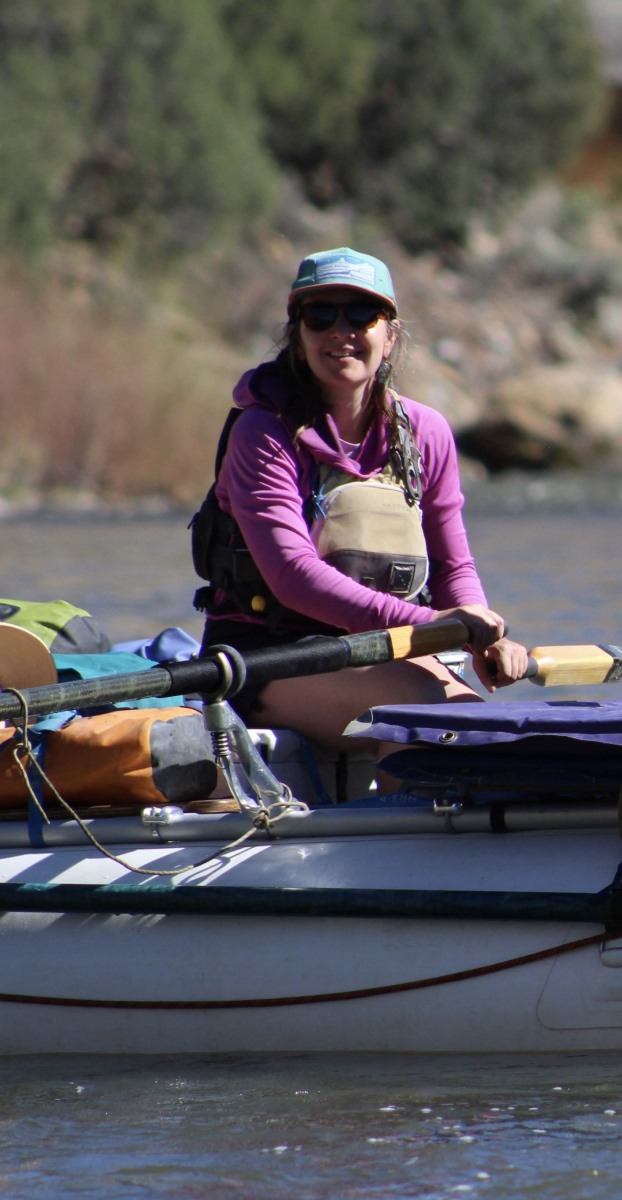
Cecil Goodman, Ph.D., is a Full Faculty of Adventure Education at Prescott College, where, since 2014, she has led the Undergraduate Wilderness and Community-Based Orientation programs, and currently serves as the Field Risk Manager for the College. With nearly two decades of teaching experience at the university level, Cecil’s transdisciplinary teaching portfolio and research interests lie at the intersections between the environment and society, nature and justice, and education. She aspires to contribute scholarship and teaching that aids in the elimination of barriers to access, belonging, and sovereignty for individuals from traditionally minoritized and/or underserved groups, and which supports new futures and justice-oriented relationships between humans and nature. She loves the immense gifts of rivers, deserts, and mountains, especially when with her two small children, Kai and Jo, and her partner, Noah.
“I deeply value SEER’s interdisciplinary and practitioner-approach to experiential education. I have loved presenting at SEER and learning from colleagues in such a welcoming, scholarly environment. I am so excited to be joining the SEER co-chair team this year to support this scholarly community I am so honored to be a part of!”
The History of SEER
The first SEER took place at AEE's 2001 International Conference in Charleston, West Virginia. Fittingly, it was Dr. Alan Ewert of Indiana University who conceived of and led the effort to establish that first SEER. A widely published researcher and author in the field of adventure-based education, Dr. Ewert is also known for his distinguished career in academia, three decades as an Outward Bound instructor, as holder of the Patricia and Joel Meier Outdoor Leadership Chair, past editor of the Journal of Experiential Education, and as fellow and past president of the prestigious Academy of Leisure Sciences. In providing the leadership to launch SEER, Dr. Ewert was giving back to the field that he has helped develop throughout his academic and professional career.
The symposium occurs concurrently with the International AEE Conference each year and involves the presentation of research papers from leading international scholars in the field of experiential education.
