
Why Adventure Education Feels Like Home - Reflections from a New CEO
Why Adventure Education Feels Like Home - Reflections from a New CEO
In her first year as President & CEO of the Princeton-Blairstown Center, Kerri Strauss reflects on how adventure education serves as a powerful equalizer that fosters psychological safety and personal growth for both students and adults. By removing academic and social pressures, Kerri highlights how the natural environment creates a unique space where participants can build resilience, find belonging, and more fully become themselves.
Written by Kerri Strauss | President & CEO | Princeton-Blairstown Center
Hello, AEE community! What a joy to be here.
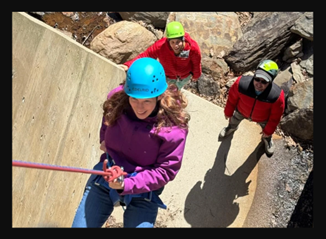 Stepping into the role of CEO at Princeton-Blairstown Center has been a bit like stepping onto a ropes course for the first time: exhilarating, humbling, and full of moments that remind me why this work matters. I’ve spent my first year doing what many of you do so well – observing, listening, and letting the environment teach me.
And the lesson that keeps coming back is simple: Adventure education creates space for people to become more fully themselves.
Listening as a Leadership Practice
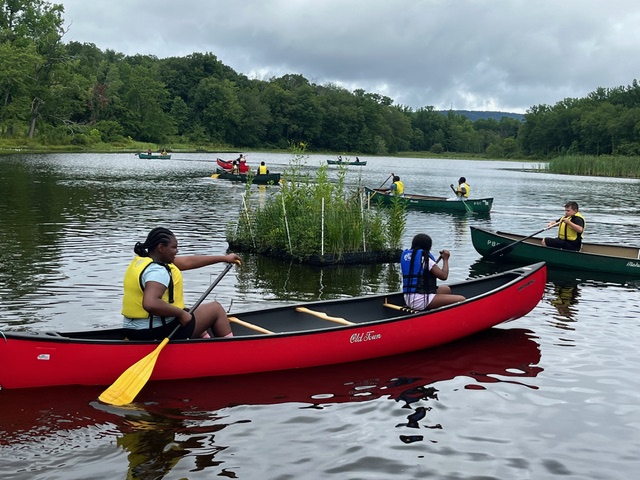 When I arrived at PBC, I made a commitment to listen before leading. I sat with staff who have facilitated thousands of youth experiences. I walked trails with educators who return year after year because they see something shift in their students when they’re outdoors. I talked with young people who told me, in their own words, that being here feels like “breathing differently.”
Those conversations reminded me that adventure education isn’t just a methodology; it’s a community of practice built on trust, curiosity, and shared responsibility.
Outdoor learning continues to reveal its power – not only for young children, but for students and adults of all ages. Recent research from Texas A&M University underscores what many of us at the Princeton-Blairstown Center witness every day: time spent learning outside strengthens well‑being, deepens engagement, and supports lasting growth.
Youth who spend time learning outdoors “may reap benefits physically, academically and emotionally,” according to the Texas A&M study. Although the research focuses on preschoolers, its findings resonate far beyond early childhood. I see the same patterns in middle and high school students who arrive at PBC carrying the weight of academic pressure, social expectations, and digital overload. Once they step into the woods, something shifts. Their shoulders drop. Their conversations deepen. Their curiosity returns. The natural world gives them permission to breathe – and to be themselves.
This year, Rob Connor from Christina Seix Academy reminded me that the impact extends to adults as well. Teachers and chaperones often arrive thinking they are “just here for the kids,” but they leave with their own stories of renewal. The Texas A&M study echoes this truth: educators who spend more time outdoors report lower stress, higher well‑being, and reduced burnout.
At PBC, we see these transformations unfold in real time. A quiet student finding their voice on the trail. A teacher rediscovering joy in their work. These moments remind us that outdoor learning is not simply an educational strategy – it’s a human one, offering space for growth at every age.
Belonging Comes First
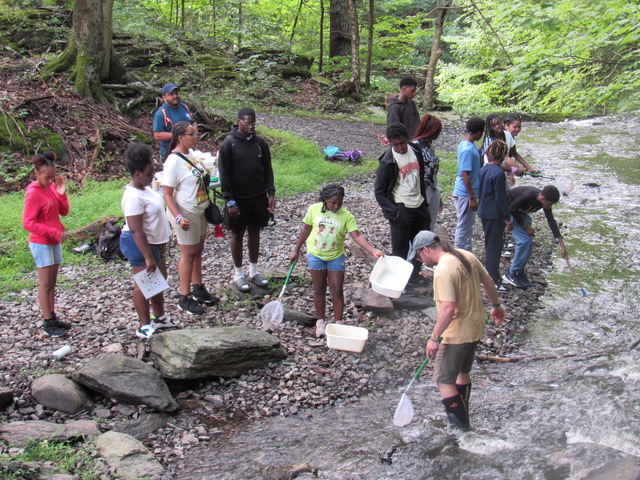 One of the most powerful things I’ve witnessed so far is how quickly a sense of belonging can take root when young people feel seen and supported. Before any harness is clipped or paddle hits the water, our facilitators focus on creating psychological safety. That foundation allows challenge to become opportunity rather than threat.
Belonging isn’t a “nice to have.” It’s the soil that allows growth to take hold.
It’s seen in a name‑game that sparks laughter. A moment of quiet reflection by the lake. A circle conversation where every voice is invited in. These practices aren’t warm‑ups; they’re the foundation that allows challenges to become opportunities for growth.
Challenge as a Catalyst
Adventure education has always embraced challenges, but I’m struck by how nuanced that challenge can be. Sometimes it’s physical: balancing on a log, navigating a canoe, or hiking a trail. Other times it’s social or emotional: speaking up in a group, trusting a partner, or trying something new in front of peers.
What I love about this field is that we don’t treat challenges as something to conquer. We treat it as something to explore. That mindset shift is transformative.
The Outdoors as Equalizer and Teacher
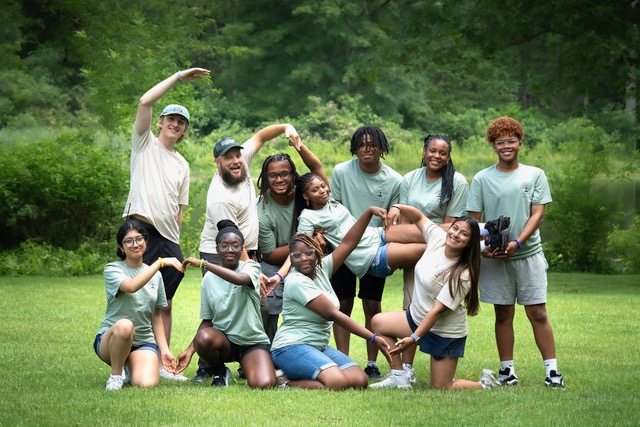 I’ve spent much of my career in social work and youth development, but the outdoor setting adds a dimension that still surprises me. The forest doesn’t care what school you go to. The lake doesn’t ask about your GPA. The trail doesn’t measure your net worth.
It’s the dimension of the setting itself that becomes a teacher. It stands outside any one of us - steady, neutral, and grounding. That external presence adds a layer of connection we can’t manufacture on our own.
I’ve watched students who rarely speak in class suddenly take the lead navigating a trail because they have a natural sense of direction. I’ve seen a teenager who struggles academically become the most patient, encouraging partner during a canoe lesson. In the woods, strengths that often go unnoticed in traditional settings rise to the surface. The environment levels the playing field in a way that feels both gentle and profound.
Even simple moments carry weight. A group of ninth graders sitting on a log, sharing stories as if they’ve known each other for years. A student who usually hides behind a hoodie lifting their head to watch a hawk circle overhead. A team that arrived divided by school cliques suddenly cheering for one another on the low‑ropes course. Nature has a way of stripping away the noise so belonging can take root.
Over this past year, I have seen first-hand how outdoor education can create space for identity, connection, and emotional well‑being. At PBC, I see that reality unfold daily. The setting doesn’t just support the work - it transforms it, reminding every person, young or adult, that they are more than the roles they play back home.
Outdoors, young people get to rewrite the stories they’ve been told about themselves. They get to practice resilience in real time. They get to see themselves as capable, creative, and connected. And honestly, so do adults.
Adventure Education Is Evolving – and That’s a Good Thing
As a newcomer to this role, I’m energized by the conversations happening across the field. We’re talking more openly about equity, access, and the responsibility we hold when working with young people. We’re examining our traditions and asking which ones still serve us, and which ones need to evolve.
This is the kind of reflective, values-driven work that keeps a field vibrant.
Why I’m Excited to Join This Community
I ’ve long admired AEE for its commitment to learning, collaboration, and elevating diverse voices. The launch of the Community Voices blog is another example of that spirit. I’m grateful for the chance to contribute a perspective from someone who is both new to a CEO role in this type of organization and deeply invested in the future of adventure education.
My hope is to continue learning from all of you – your research, your stories, your innovations, and your questions. Our field flourishes when we share generously and engage in thoughtful conversations about the future.
Every time someone shares an insight, a breakthrough from their program, or even a challenge they’re wrestling with, it widens the field for all of us. Outdoor and experiential education is collaborative rather than competitive.
What excites me most is the possibility of building a community where we learn with one another, not just alongside one another. When someone brings forward a new approach to fostering belonging, or a fresh way to integrate outdoor learning into academic content, it sparks ideas that ripple outward. When someone asks a hard question about equity, access, or impact, it pushes us all to grow.
Our field flourishes when we share generously and engage in thoughtful conversations about the future. None of us has the full picture, but together we hold a mosaic of perspectives that can shape something truly meaningful. My hope is that we keep exchanging those pieces openly, humbly, and with a shared commitment to the young people and educators we serve.
Closing Thoughts
 Adventure education is, at its core, about possibility. It’s about creating environments where people can stretch, reflect, and discover something new about themselves. As I settle into my role at Princeton-Blairstown Center, I’m honored to steward an organization that has believed in that possibility for more than a century.
And I’m equally honored to join this community of practitioners, educators, and leaders who continue to push the field forward.
I look forward to the conversations ahead and growing together.
Warmly, Kerri Strauss
President & CEO
Princeton-Blairstown Center